Is A Zipline Above Dubrovnik Safe? Kit, Braking And Weight Limits Explained
What the safety kit, passive braking and weight windows actually mean for the zipline at Dubac and the Panorama zipline on Srđ, with the questions to ask before booking.
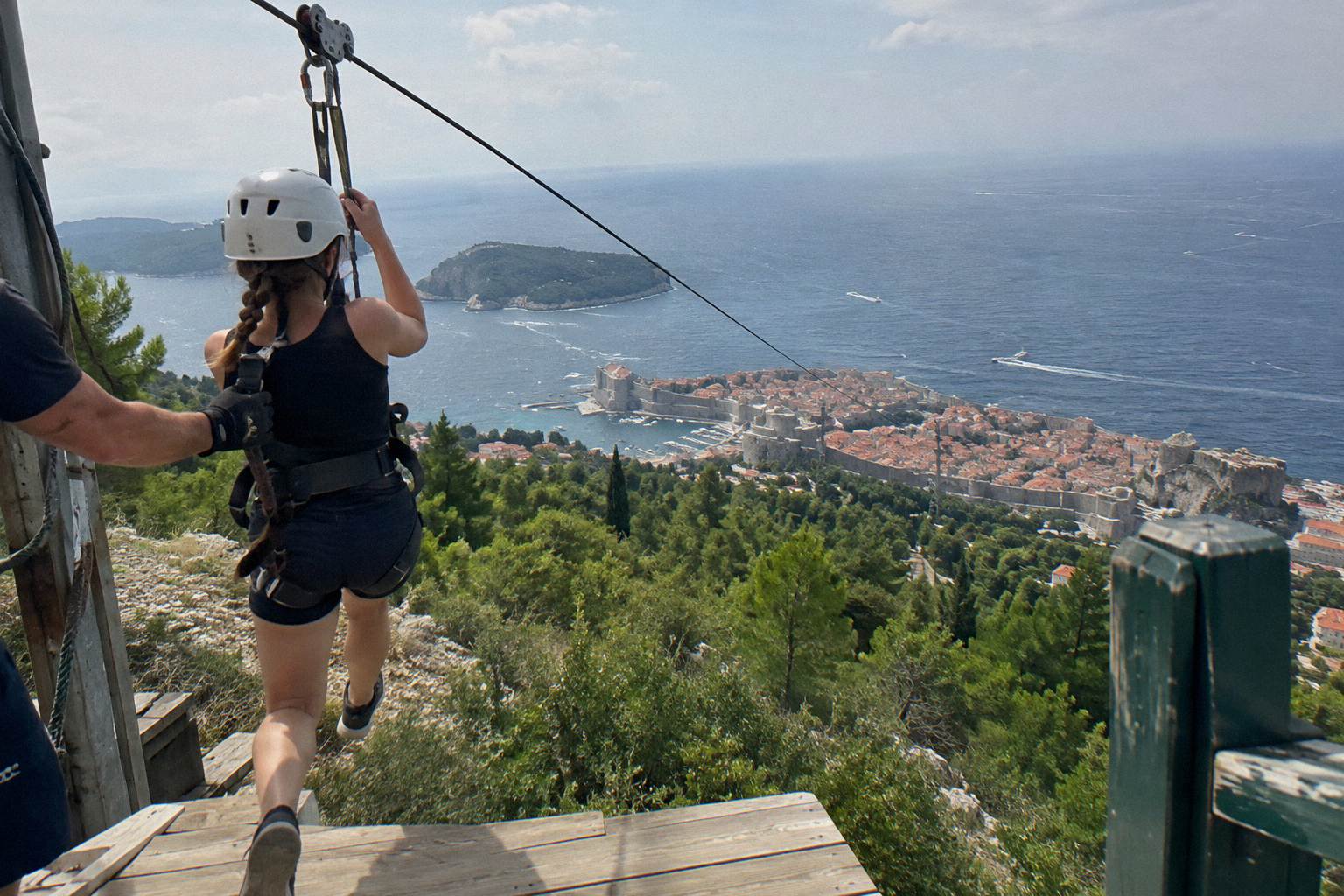
Yes, in the sense that matters: the zipline at Dubac runs on a defined kit list, a defined weight window and a weather rule. Riders get a harness, helmet, gloves and goggles, passive braking, instructors and insurance, with a 50 to 110 kg weight window on a single 900 m line, and the operator cancels in rain or strong wind. The Panorama zipline on Srđ is a separate operation with two 250 m lines and a 117 kg ceiling.
Safety questions about ziplines usually come from three places: fear of the kit failing, fear of the landing, and fear of being the wrong shape or size for the equipment. All three have concrete answers above Dubrovnik, and none of them require accident statistics to feel settled, so this article does not use any. It sticks to what the operators put in print and what a careful visitor can confirm at booking.
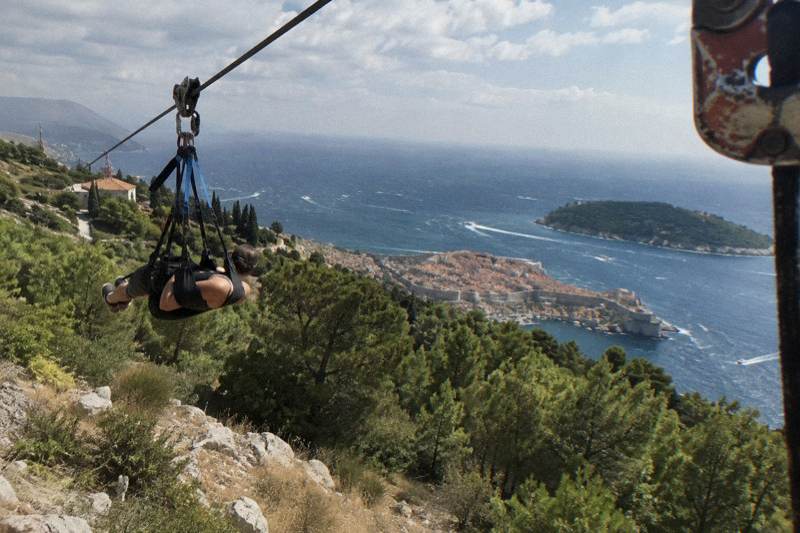
The ride most visitors mean is DU the Wire at Dubac, run by The Wire d.o.o.: one line, 900 m long, flown in the superman position from a start 175 m above sea level, reaching up to 100 km/h. It sits about 4 km from the Old Town at the first bus stop after it, on the D8 16. It is bookable in two durations, Superman Zipline, 1 Hour 15 Minutes rated 5.0 across 692 reviews, and Superman Zipline, 1.5 Hours rated 4.9 across 844 reviews, both from €50 per person with free cancellation up to 24 hours.
Both booking options buy the same line, the same kit and the same weight rule; the difference is how long your slot lasts. For a nervous rider, that choice matters less than the sections below, so read those first and pick a duration afterwards. If you want the mechanics of the flight itself before deciding, the companion piece on how the Dubac superman ride works covers the launch, the position and the arrival in plain language.
What Safety Kit Is Included At Dubac?
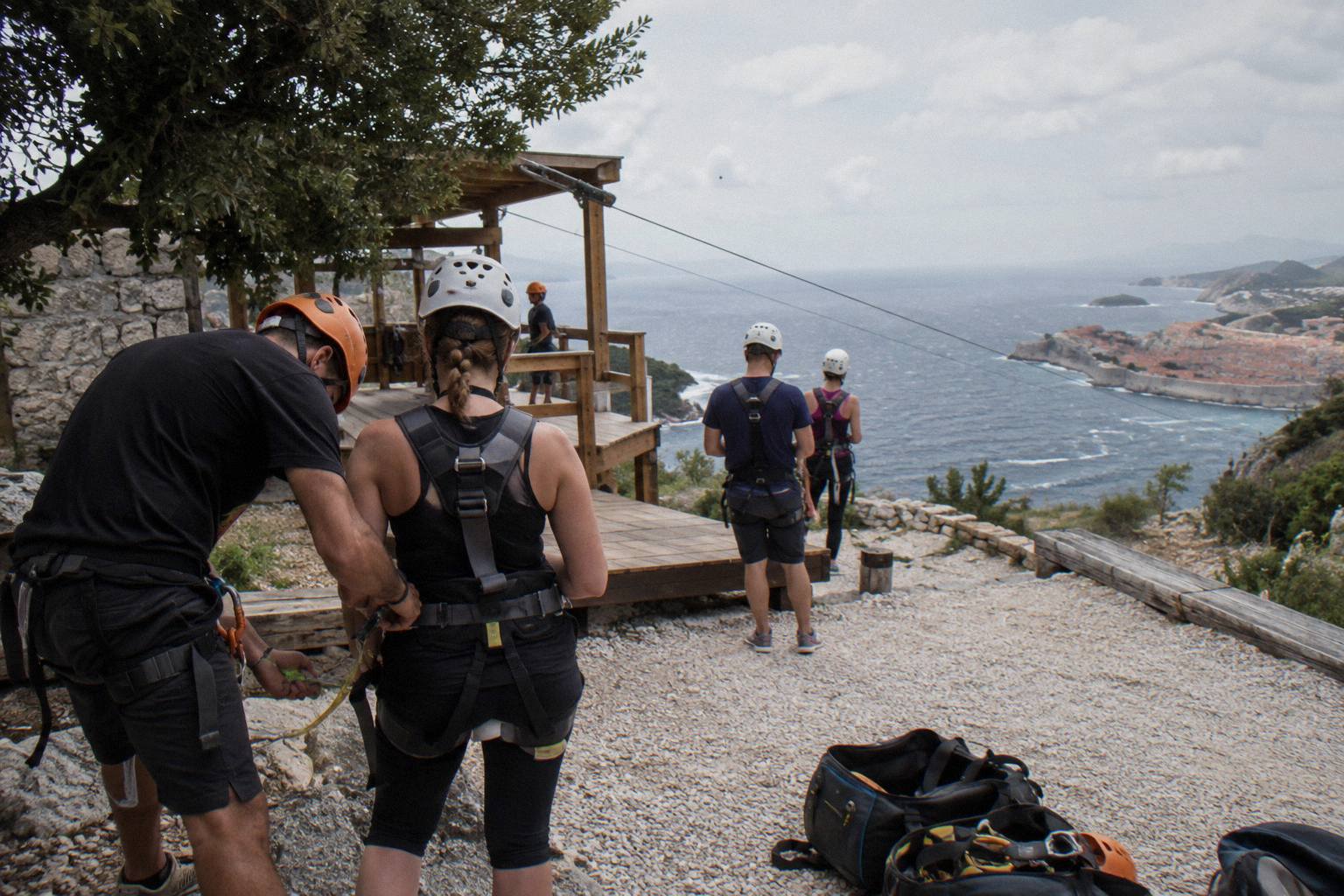
Every booking at Dubac includes the full kit: a harness, a helmet, gloves and goggles, plus passive braking on the line, instructors on site and insurance, with VAT and water thrown in. The operator's own site lists this package explicitly, so nothing on the safety side is left to the rider to bring or buy. Free parking at the base is part of the same deal, and the season runs March to October, 09:00 to 18:00 daily.
This is the single most reassuring fact for a first-timer: the kit is not an upsell. The price you see, from €50 per person on either booking option, already contains the harness and helmet and everything that goes with them. You do not arrive to discover that the helmet costs extra, and you do not need to pack gloves from home.
The kit in full, as the operator lists it on the DU the Wire site:
| Item | What it does for you | Included in the booking |
|---|---|---|
| Harness | Carries your body through the superman position on the line | Yes |
| Helmet | Head protection for launch, flight and arrival | Yes |
| Gloves | Protects your hands during the ride | Yes |
| Goggles | Keeps your eyes clear at speeds up to 100 km/h | Yes |
| Passive braking | The line slows you without any input from you | Yes |
| Instructors | Present on site at the Dubac base | Yes |
| Insurance | Coverage bundled into the booking price | Yes |
| VAT and water | No hidden tax; a bottle after the ride | Yes |
If you are weighing whether that package justifies the price tag, the write-up on whether the Dubac superman ride is worth €50 walks through the value question without the sales pressure.
One point of contrast: the Panorama Zipline on Srđ, run by Dubrovnik fun tours j.d.o.o., is a different operation in a different place, and it does not come with the same kit breakdown. Its line facts are two lines of 250 m each, speeds up to 80 km/h and a weight ceiling of 117 kg. A nervous reader comparing the two should simply confirm the kit with the Srđ operator at booking rather than assuming it matches Dubac.
What Does Passive Braking Mean For A Nervous Rider?
Passive braking means the zipline slows you down at the end of the line by itself; you do not pull a lever, grab the cable or do anything with your hands. It is built into the Dubac ride and listed among the inclusions, alongside the harness, helmet, gloves and goggles. For anyone whose main fear is the landing, this is the part of the design that answers it.
Most people who worry about ziplines are not actually worried about flying. They are worried about stopping. The mental picture is of arriving at speed with some task to perform, a brake handle to remember, a technique to learn on the spot. Passive braking removes that picture entirely: the slowing happens at the line's end regardless of what you do, and your only job during the flight is to hold the position the instructors set up at the start.
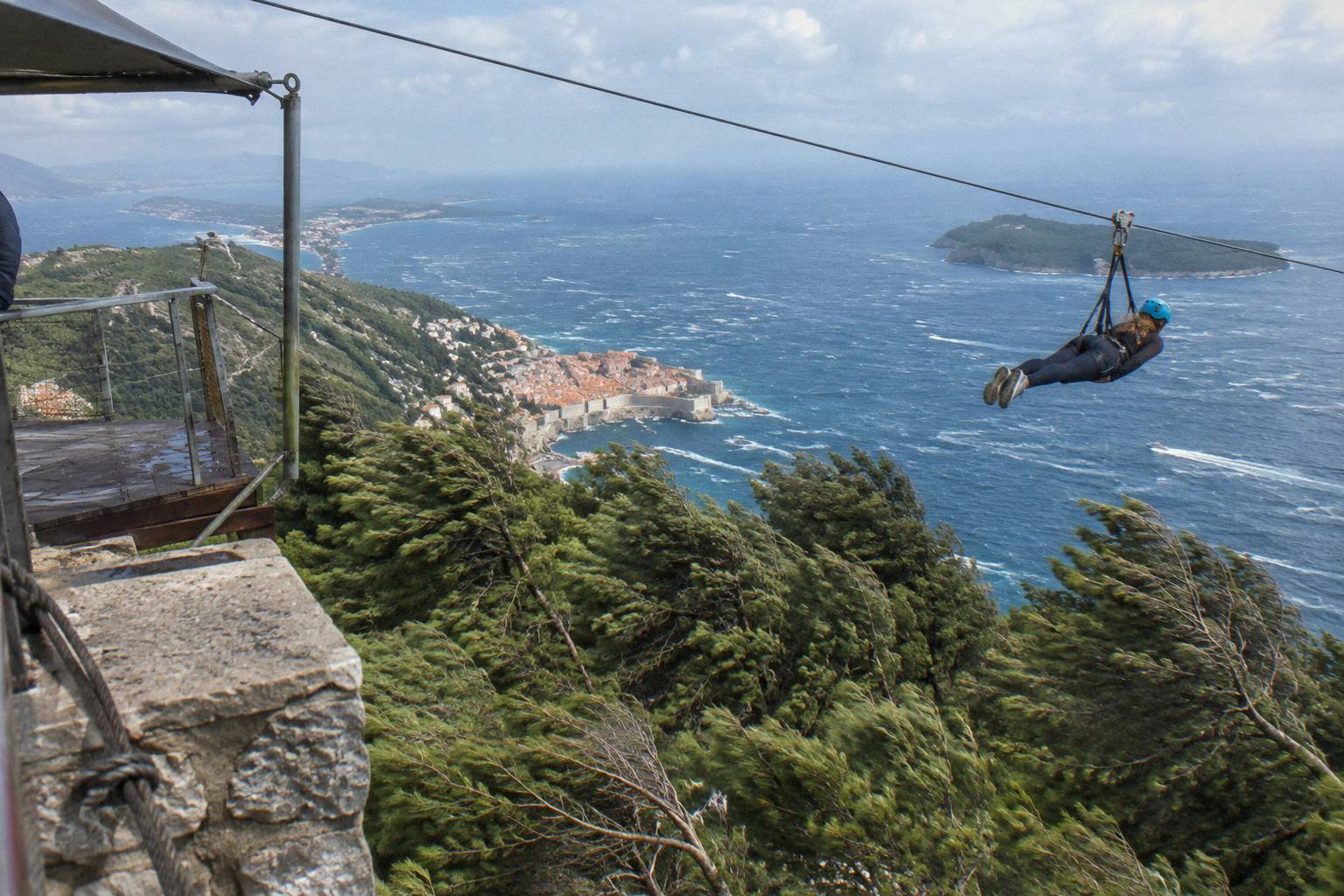
What this means in practice for the 900 m line at Dubac: you fly the whole length in the superman position, face down, with the kit doing the work, and the arrival is handled by equipment rather than by your reactions. The speed reaches up to 100 km/h, so goggles are not a comfort extra, they are part of the system that keeps your vision clear for the entire flight.
There is a useful way to think about the division of labor here. The equipment handles the two things a beginner cannot practice at home: carrying your weight at speed and bringing you to a stop. The rider handles the one thing anyone can do: staying in the position they are placed in. Nothing in that split requires experience, strength or a cool head under pressure.
For readers who feel the fear physically rather than intellectually, the article on whether the Dubac superman ride is scary takes on that question directly, sensation by sensation, without pretending the height does not exist.
Who Can Ride? The Weight Windows At Dubac And Srđ
At Dubac the weight window is 50 to 110 kg, applied to every rider on the 900 m line, and the operator confirms fit at booking. At the Panorama zipline on Srđ the ceiling is up to 117 kg, and the operator there confirms fit at booking in the same way. Neither park prints a minimum age here, and any other personal limits are confirmed with the operator when you reserve.
The weight window is the one hard number a nervous reader should check before anything else, because it is the gate you cannot negotiate with. If you fall between 50 and 110 kg, the Dubac ride is built for you; if you fall outside it, the honest answer is that this particular line is not your ride, and the operator confirms any individual case at booking.
| Limit | Dubac (DU the Wire) | Srđ (Panorama Zipline) |
|---|---|---|
| Weight window | 50 to 110 kg | Up to 117 kg |
| Lines | One line, 900 m | Two lines of 250 m (500 m total) |
| Top speed | Up to 100 km/h | Up to 80 km/h |
| Kit list in print | Harness, helmet, gloves, goggles, passive braking, insurance | Confirm with the operator at booking |
| Weather rule | Cancelled in rain or strong wind | Confirm with the operator at booking |
A rider over 110 kg sometimes asks whether Srđ is "the option" for them. The printable answer is narrower: the Srđ limit is up to 117 kg, and the operator confirms fit at booking. Nothing more specific should be assumed in either direction. The fuller comparison, including how each park fits into a day, is in Dubac or Srđ: which zipline fits your day.
For health questions beyond weight, including the pregnancy question readers ask most often, see can you zipline while pregnant above Dubrovnik, and for the general frame around limits, the weight, age and health limits guide.
The shorter booking option, the 75 minute row, suits a nervous rider well for one simple reason: less time at the base between arrival and flight. It is the same 900 m line, the same kit, the same 50 to 110 kg window, and it is the more strongly rated of the two rows at 5.0 across 692 reviews, from €50 per person.
What Happens If The Weather Turns?
The operator at Dubac cancels the ride in bad weather, meaning rain or strong wind, rather than flying through it. That rule is stated plainly by the operator and applies across the March to October season. Combined with the free cancellation window of 24 hours on both booking options, a nervous rider is never forced to choose between losing the money and flying in conditions the operator would not choose.
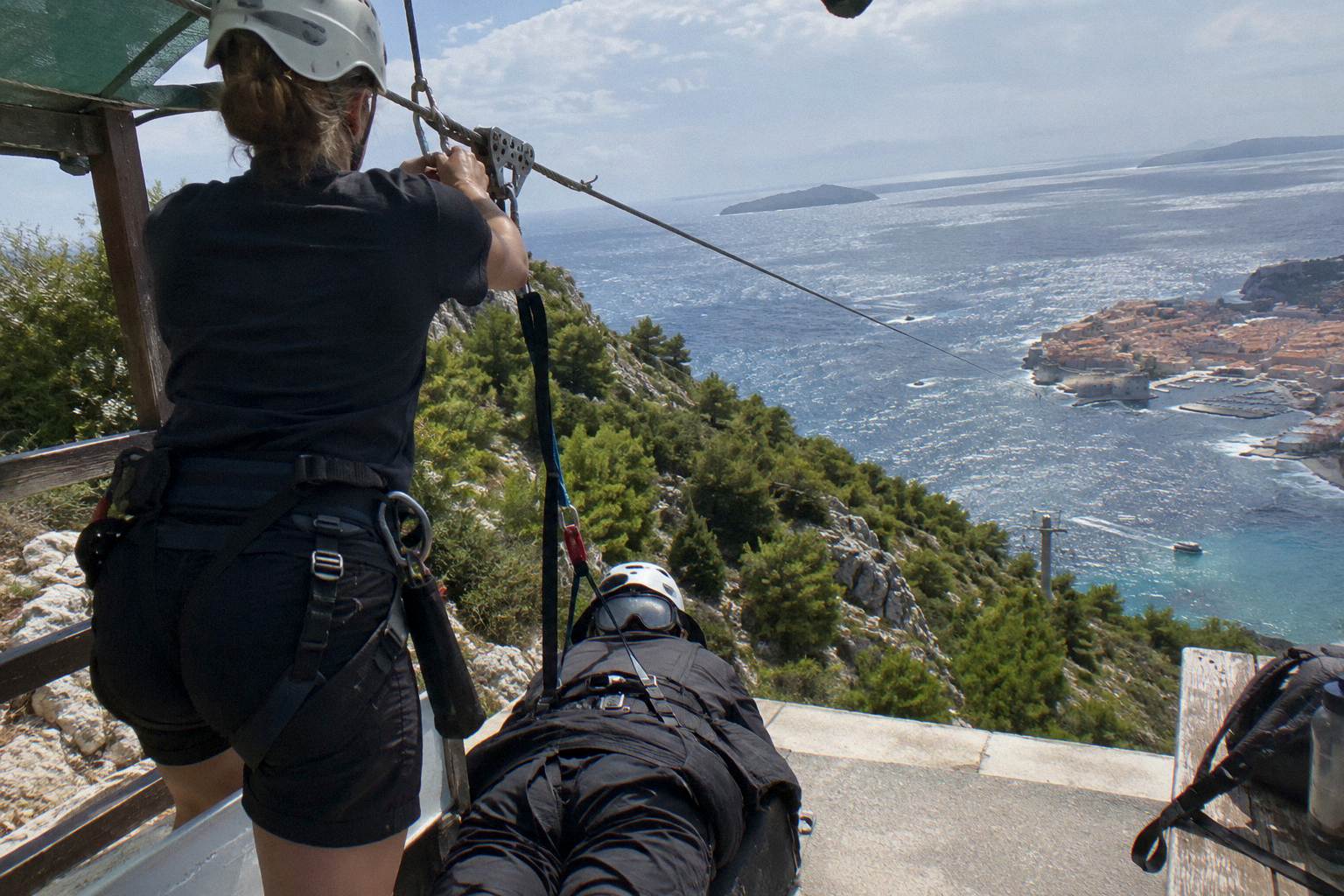
This matters more than it might seem. A large share of zipline anxiety is really anxiety about being committed: having paid, having traveled to the base, feeling unable to back out even when the sky looks wrong. The weather rule removes that pressure from the equation, because the decision to ground the flight is the operator's, not yours, and it happens before anyone is clipped into a harness.
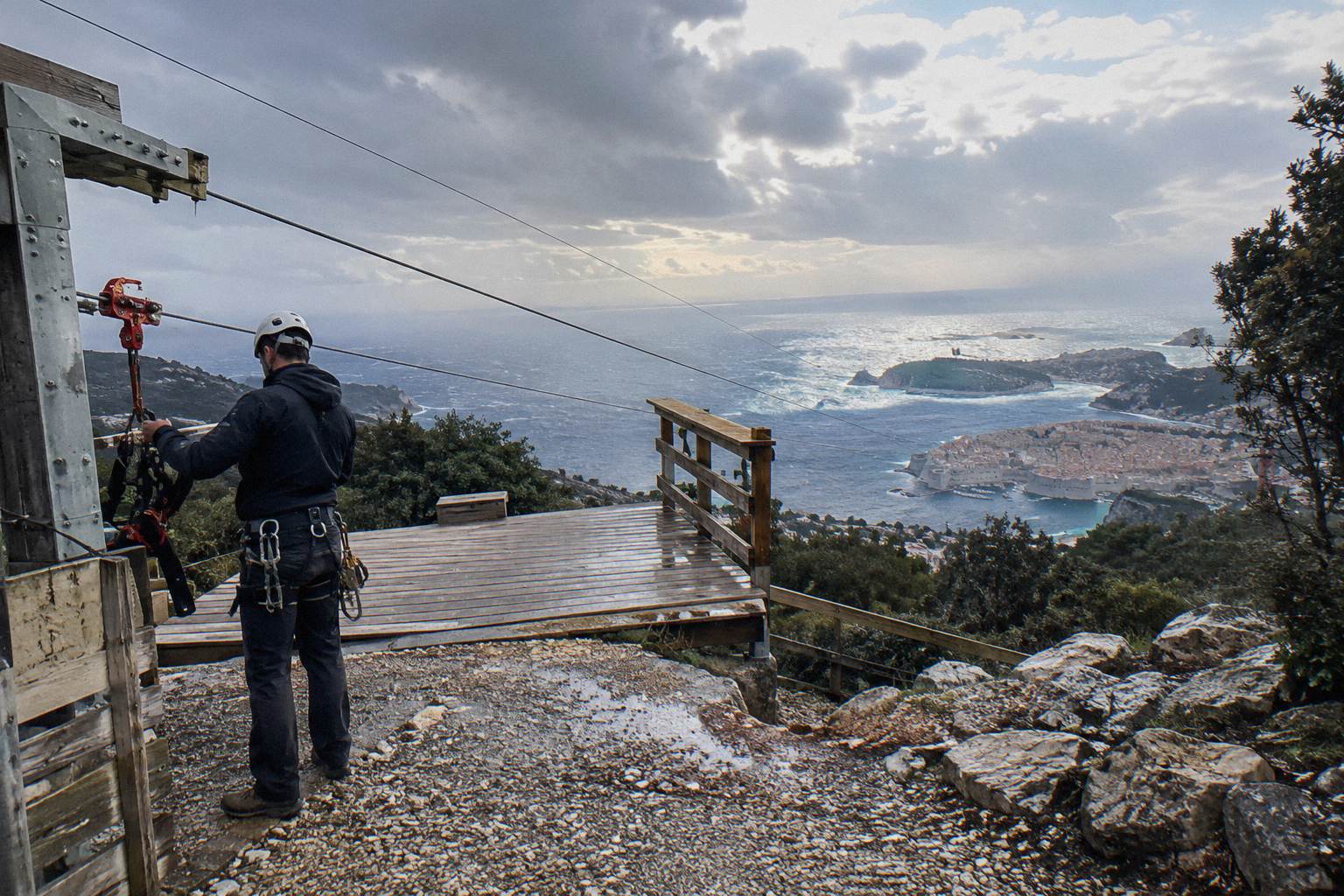
There is no published wind-speed threshold to quote, and none is needed: the rule is that rain or strong wind means cancellation, full stop. The detailed treatment of rescheduling, refunds and what a cancelled day looks like is in does wind or rain cancel the superman ride at Dubac.
For logistics on the day itself, the operator's getting-there page covers bus 10 from the Cable Car bus station, taxis to the Dubac stop and free parking at the base; the walk back to the Old Town is about 4 km downhill, roughly 45 minutes, with return buses running one to two per hour.
The seasonal frame helps here too. Because the season runs March to October, the months with the roughest Adriatic weather sit outside it entirely, and the daily window of 09:00 to 18:00 means flights happen in daylight only. A nervous reader planning around the weather should also keep one flexible day in their itinerary, so that a cancellation becomes a reschedule rather than a lost experience; the pairing ideas in a zipline day with the cable car, buggy or kayak are useful for exactly that kind of buffer planning.
What To Ask The Operator Before You Book
A nervous reader needs about five answers before paying, and every one of them can be confirmed at booking: that you fall inside the 50 to 110 kg window, that the full kit is included, that the weather rule protects you, that cancellation is free up to 24 hours, and that any personal circumstance outside the printed limits is cleared directly with the operator. Ask these before you pay, not at the base.
The point of asking is not to catch anyone out. It is to move every remaining unknown from the day of the flight to the day of booking, when changing plans costs nothing. Both booking options carry free cancellation up to 24 hours, so an answer you do not like still leaves you a free exit.
| Question | Why it matters | The printed answer for Dubac |
|---|---|---|
| Do I fall inside the weight window? | It is the one non-negotiable gate | 50 to 110 kg; the operator confirms fit at booking |
| Is the full kit included in the price? | Removes surprise costs and home-packed gear | Harness, helmet, gloves, goggles, passive braking, insurance, VAT, water |
| What is the weather rule? | Removes the pressure to fly in bad conditions | Rides are cancelled in rain or strong wind |
| Can I cancel for free? | Keeps a nervous booking reversible | Free cancellation up to 24 hours |
| Any limit that applies to me personally? | Covers anything outside the printed figures | Confirm with the operator at booking |
Two practical details are worth pinning down at the same time as those five answers. The first is timing within the day. Dubac operates March to October, 09:00 to 18:00 daily, so if you are sensitive to midday heat or want the calmest air of the day, ask for an early or late slot rather than accepting whatever is first offered. The second is what the ride itself involves, so you know the numbers before you arrive rather than hearing them on the platform. The Dubac line is 900 m long and reaches speeds up to 100 km/h. Knowing those two figures in advance is part of the same job of moving unknowns from the flight day to the booking day: a nervous rider who has already absorbed "900 metres" and "100 km/h" at home has nothing left to startle them at the top.
The longer booking option, Superman Zipline, 1.5 Hours, is the more reviewed of the two rows at 4.9 across 844 reviews, from €50 per person. If your questions are all answered and you want the fullest version of the day at Dubac, it is the same ride with more time around it.
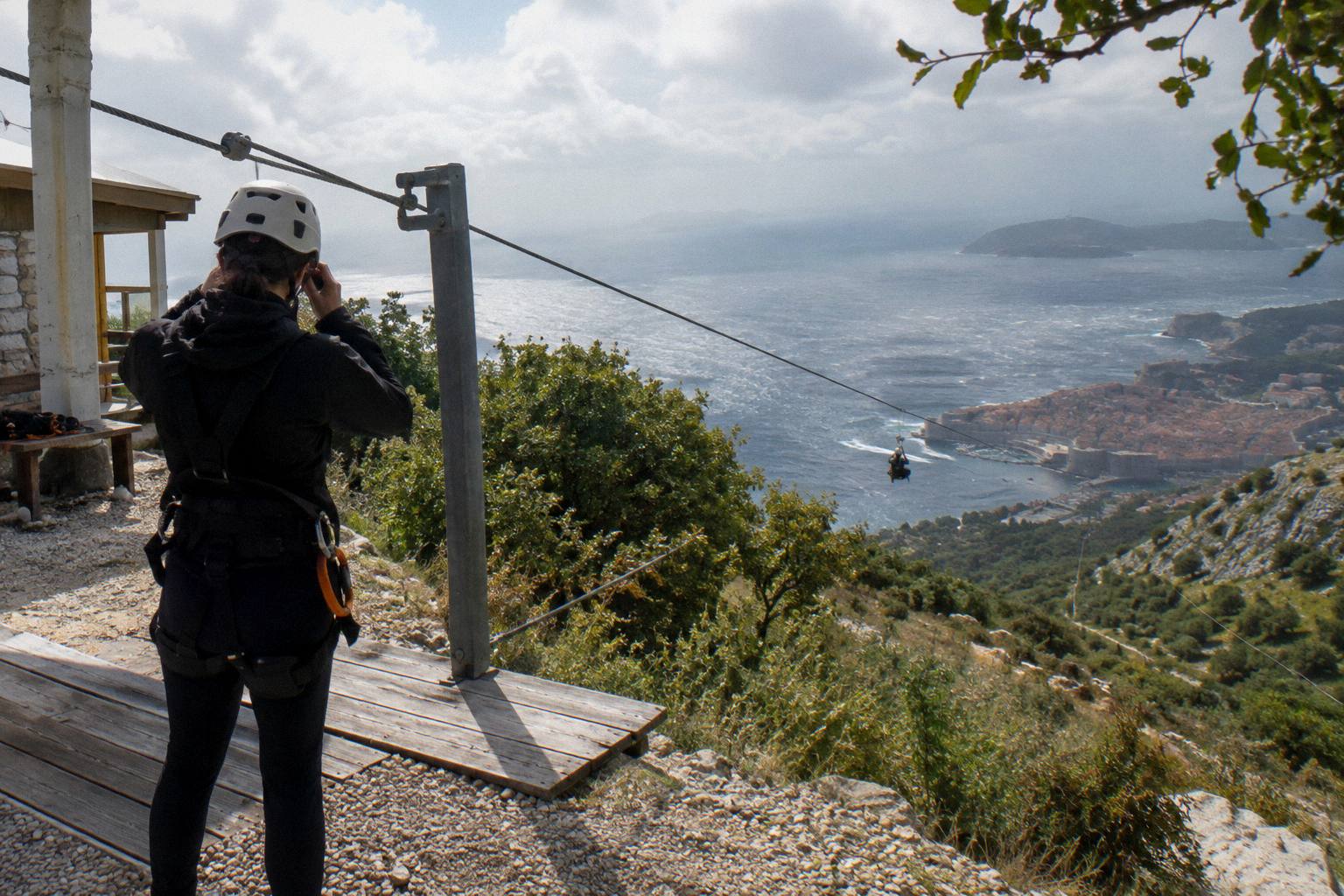
One more question worth adding to your list: what happens if the weather rule is triggered? Since rides are cancelled in rain or strong wind, and cancellation is free up to 24 hours, ask at booking whether a weather cancellation is rebooked or refunded, so a washout on the day does not become a second round of uncertainty. If you are weighing Dubac against the alternative on Srđ, the comparison is straightforward: the Panorama zipline on Srđ runs two lines of 250 m at up to 80 km/h and takes riders up to 117 kg, while Dubac runs a single 900 m line at up to 100 km/h. That difference in scale is the core reason to choose one over the other.
The decision logic for a nervous reader is short. Weigh yourself against the 50 to 110 kg window first; if you are inside it, the kit and the passive braking answer the equipment fear, the weather rule answers the commitment fear, and the 24 hour cancellation answers the money fear. What remains is the flight itself, and everything about that is described in how long a zipline tour above Dubrovnik lasts if timing is your last open question. You can also check live availability for the 90 minute slot here: Check availability, or read the wider lay of the land in ziplines in Croatia: Dubac, Srđ, Omiš and Split.
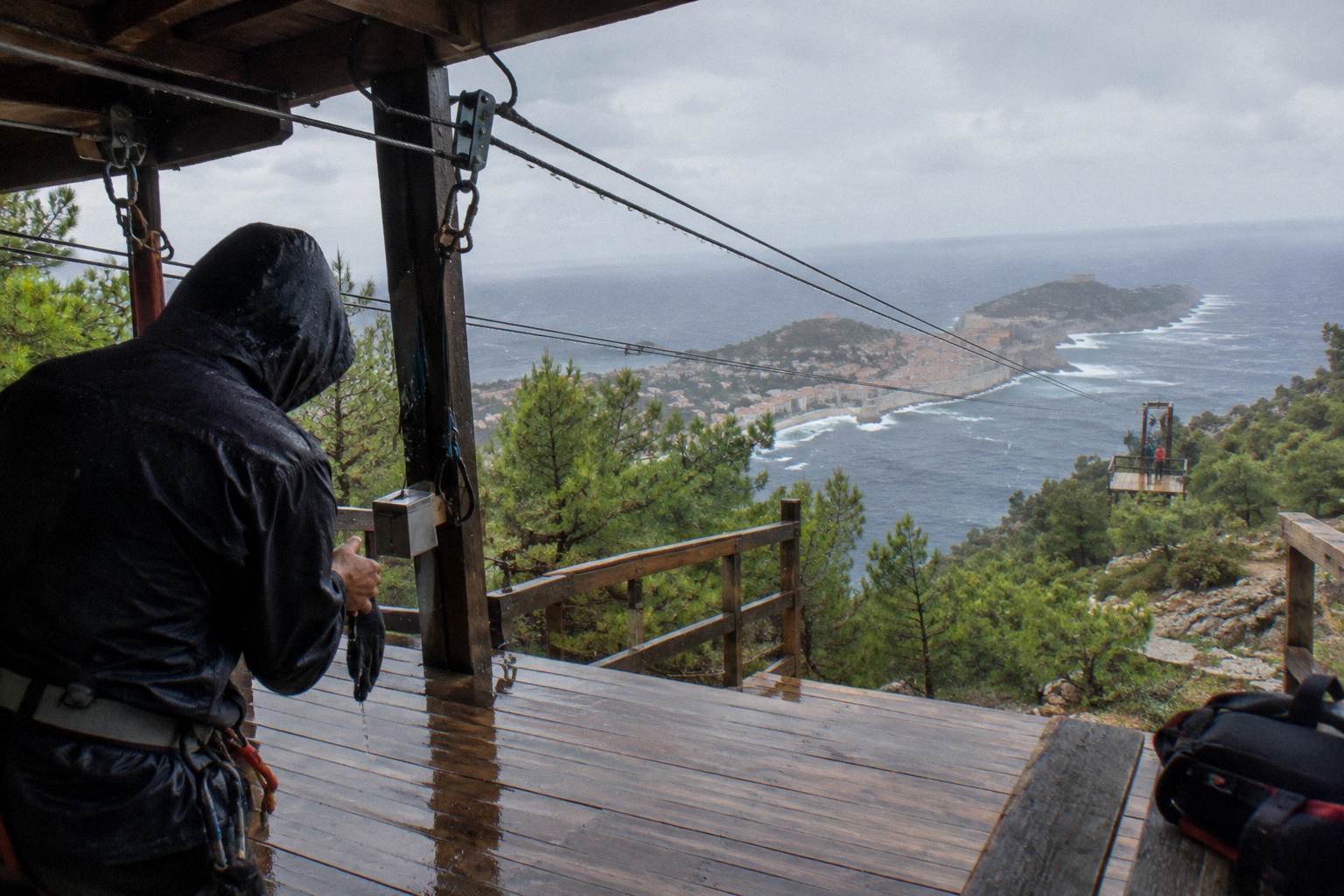
Is a zipline above Dubrovnik safe? The kit, the braking and the weight limits all point the same way at Dubac, and the operator confirms its procedures with you at booking. Dubrovnik Ziplines exists to keep those printed figures in one place so the decision is made on data, not on nerves.
Common Questions About Zipline Safety Above Dubrovnik
Is A Zipline Above Dubrovnik Safe?
By the printed standards, yes: the Dubac ride includes a harness, helmet, gloves and goggles, passive braking, instructors and insurance, holds riders to a 50 to 110 kg window and cancels in rain or strong wind. The operator confirms its safety kit and procedures at booking.
What Safety Equipment Is Provided At The Dubac Zipline?
Harness, helmet, gloves and goggles, with passive braking on the line, instructors on site and insurance included, all as part of the booking price alongside VAT, water and free parking.
What Is The Weight Limit For A Zipline Above Dubrovnik?
At Dubac the window is 50 to 110 kg for every rider. At the Panorama zipline on Srđ the ceiling is up to 117 kg. In both cases the operator confirms fit at booking.
Does The Zipline Cancel In Bad Weather?
Yes. The Dubac operator cancels rides in rain or strong wind, and both booking options carry free cancellation up to 24 hours, so a weather decision never costs you the ticket.
Do I Have To Brake Myself On The Zipline?
No. The Dubac ride uses passive braking, which is included in the booking: the line slows you down without any input from you during the flight or the arrival.
Is The Srđ Zipline Safer Than The Dubac One?
Neither park is claimed to be safer than the other. They are different operations: Dubac runs one 900 m line with a printed kit list, and Srđ runs two 250 m lines with a weight ceiling of up to 117 kg. Confirm kit with each operator at booking.