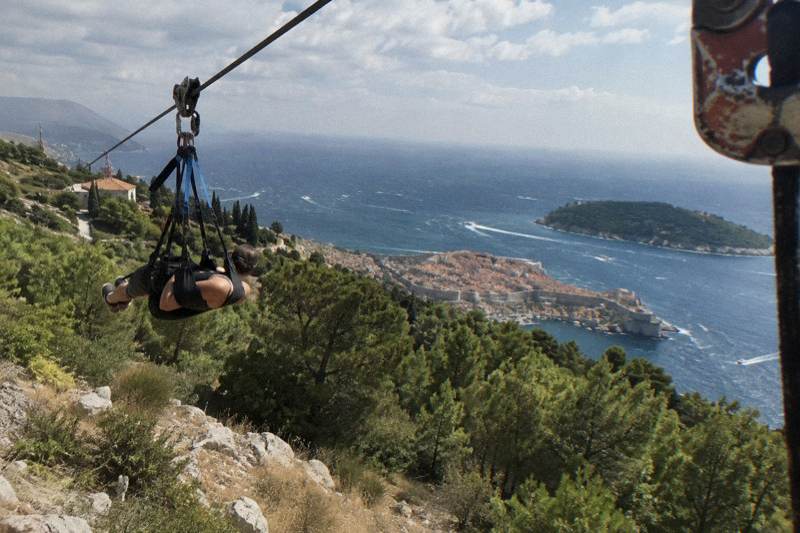
What To Wear And Bring On A Zipline Tour Above Dubrovnik
A practical packing list for the superman zipline at Dubac: what the operator already includes, what shoes to wear, and what to leave at home.
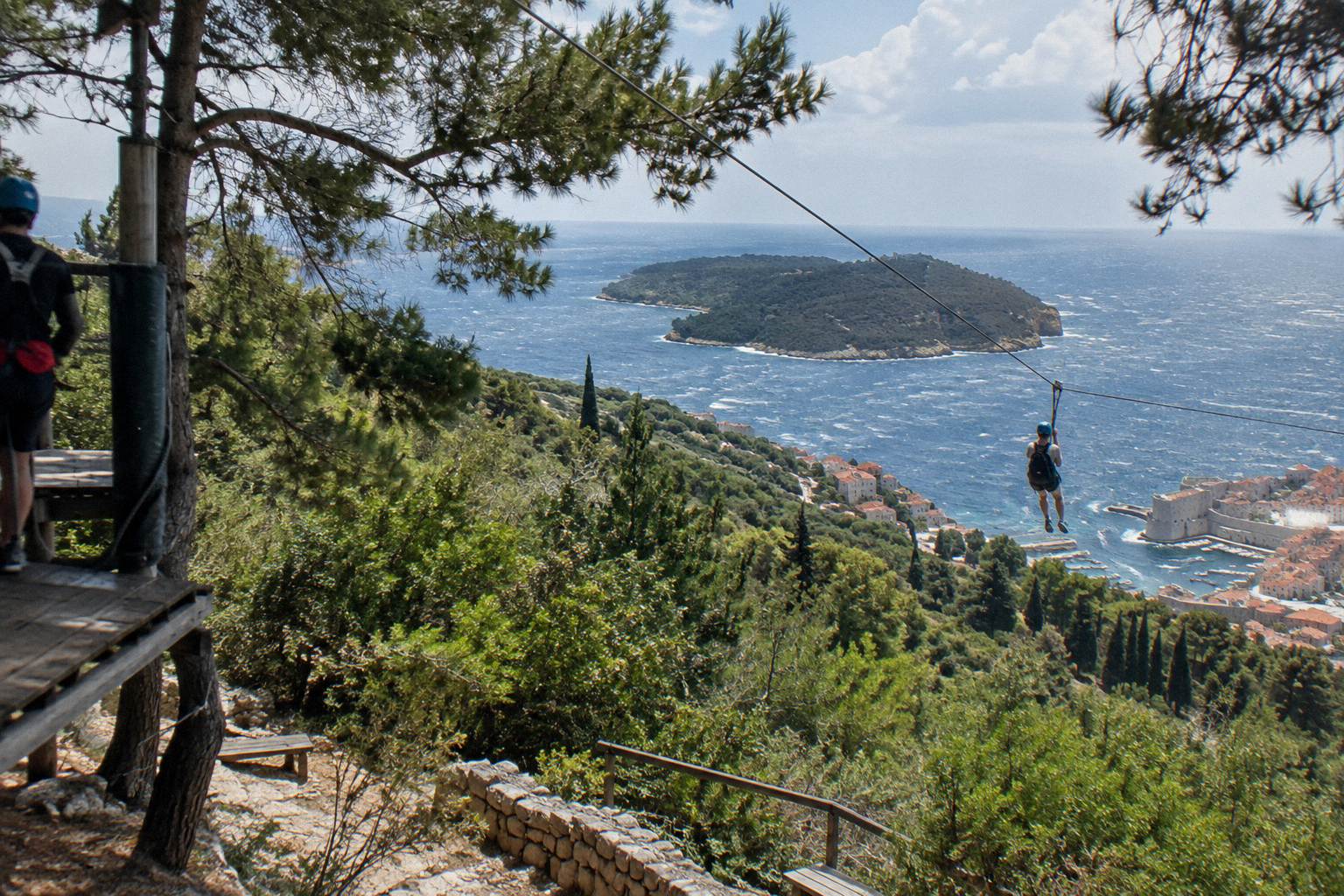
Wear comfortable, close-fitting clothes and closed, sturdy shoes, and bring almost nothing: the operator at Dubac already includes the harness, helmet, gloves and goggles, along with water and free parking. The one item that genuinely matters is footwear, because the walk back to the Old Town is about 4 km downhill, around 45 minutes on foot, and the right shoes turn that into a pleasant stroll rather than a chore.
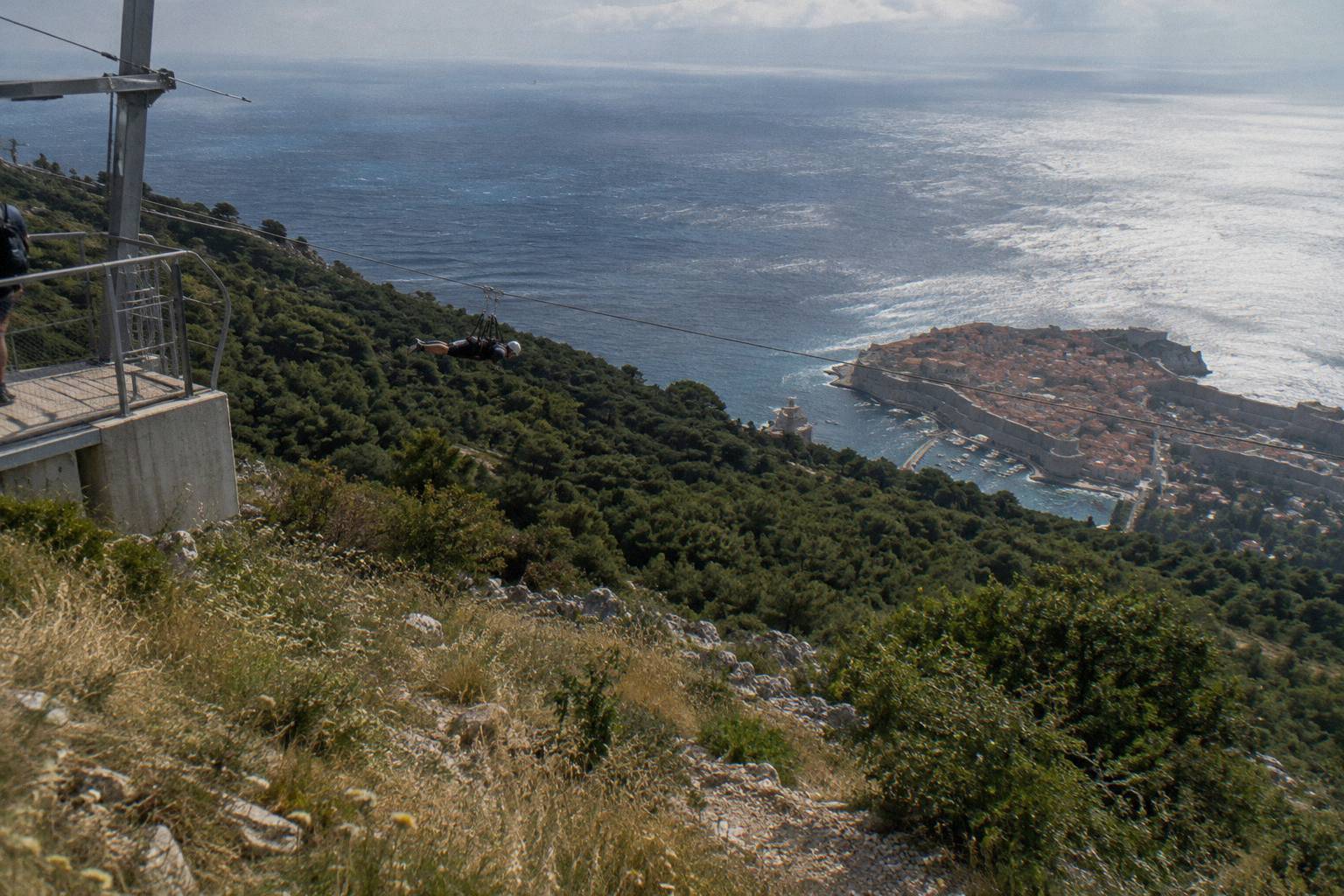
The zipline at Dubac is a single 900 m line flown in the superman position, starting 175 m above sea level and reaching up to 100 km/h. It sits about 4 km from the Old Town, at the first bus stop past it on the D8 16 road, and runs from March to October between 09:00 and 18:00. The ride is sold as two booking options for the same experience: the Superman Zipline, 1 Hour 15 Minutes from The Wire d.o.o., rated 5.0 across 692 reviews, and the longer slot, both from €50 per person with free cancellation up to 24 hours before. Once the booking is made, the practical question is what goes in your bag, and the honest answer is that the operator's own inclusion list covers most of it.
Because the kit is provided, this article is mostly about clothing choices and the handful of small items that make the day easier. There is no verified operator dress code, so everything below is general sensible advice for a coastal zipline day rather than a rule set by the base. The operator confirms any specific requirement at booking.
That is worth pausing on, because packing anxiety is one of the few things that can dull a day like this. Riders spend the evening before a flight googling harness-compatible trousers and worrying about helmets, when the reality at Dubac is that the equipment side of the trip is already handled. The decisions left to you are the same ones you would make for any morning walk along the coast: shoes, layers, sun cream, and how much to carry. Get those four right and the flight takes care of itself.
If you have not yet picked a time slot, the two options differ only in booked duration, so the packing advice is identical for both:
What The Operator Already Includes
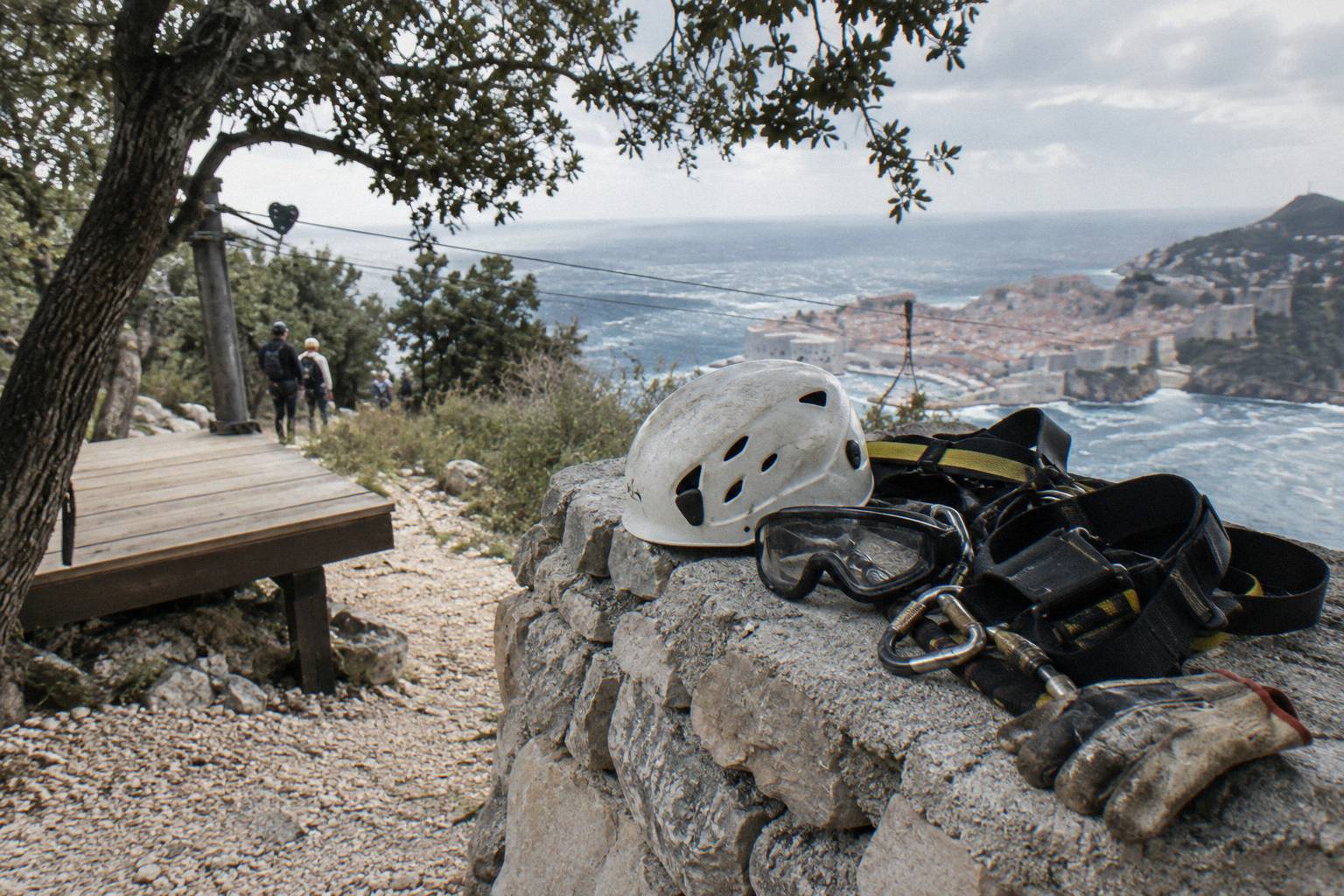
You need to bring nothing technical: the harness, helmet, gloves and goggles are all included, along with passive braking, insurance, VAT, a bottle of water and free parking at the base at Dubac. That leaves clothing and shoes as the only real decisions, and it means a family of four can arrive with empty hands and still be fully equipped for a 900 m flight at up to 100 km/h.
This is the part most first-time riders get wrong. People arrive with cycling gloves they bought specially, or worry about hiring a helmet, when the operator's inclusion list already covers every piece of safety equipment used on the line. The same inclusions apply to both booking options, the 1 hour 15 minute slot and the longer one, because they are two ways of booking the same ride at the same base. The Superman Zipline, 1.5 Hours, rated 4.9 across 844 reviews, includes the identical kit, from €50 per person, so nobody pays extra for equipment either way.
| Item | Included at Dubac? | What it means for your bag |
|---|---|---|
| Harness | Yes, included | Bring nothing |
| Helmet | Yes, included | Bring nothing |
| Gloves | Yes, included | Bring nothing |
| Goggles | Yes, included | Bring nothing |
| Water | Yes, included | Optional extra bottle for the walk back |
| Parking | Yes, free at the base | No coins or app needed |
| Clothing and shoes | Yours to choose | The only real packing decisions |
With the equipment question settled, the rest of the day is ordinary logistics. The base sits at the first bus stop after the Old Town, about 4 km out, reachable by bus 10 from the Cable Car bus station, by taxi, or by car with free parking, and there is no transfer once you arrive. Full directions are on the operator's getting-there page. What that means for packing is simple: everything you carry to the base, you carry away from it too, unless you drive.
The insurance and VAT being included is a quiet benefit worth noticing. There is no desk-side upsell waiting for you and no surprise added at checkout, because the from-price of €50 per person already carries those costs. For a packing list, that removes another common worry: the fear of arriving under-prepared and paying for it on the spot. Nothing in the inclusion column can be upgraded or rented, so nothing needs budgeting beyond the booking itself.
Which Shoes Should You Wear?
Closed shoes with a proper sole are the single best clothing choice for this trip, not because of the flight itself but because of the walk back: the base is about 4 km from the Old Town, downhill all the way, around 45 minutes on foot. Flip-flops, high heels and loose sandals turn that stretch into a misery, while trainers or light hiking shoes make it an easy descent with a coastal backdrop.
Start with the flight and work backwards. You will be in a harness, flying horizontal in the superman position at up to 100 km/h, and secure footwear keeps your feet comfortable through take-off and landing without you thinking about it. Closed trainers are the obvious answer. They grip, they stay on, and they survive a dusty path, which is more than can be said for most holiday sandals.
Then there is the return. Plenty of riders take bus 10 or a taxi out and then decide to walk back into the Old Town, which is a common pattern for anyone who wants to see the coast at ground level after seeing it from the air. The operator's directions put that walk at about 4 km downhill and roughly 45 minutes. Buses back run one to two per hour if you change your mind, but if walking home is even a possibility, the shoes decide whether you enjoy it.
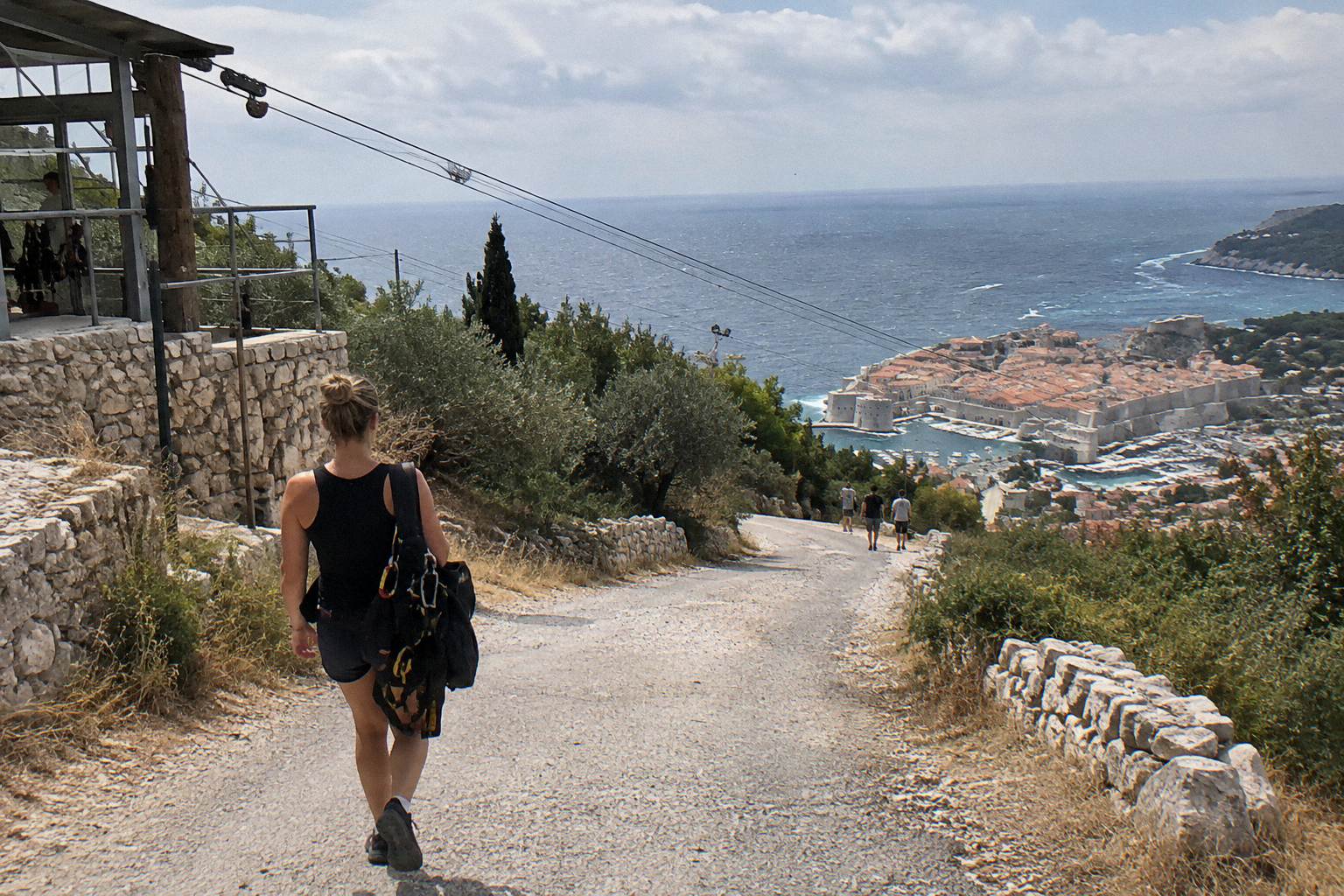
There is a simple rule of thumb here. Whatever you would wear for a half-day of wandering the Old Town's streets is almost certainly fine for the flight, provided it is closed at the toe and heel. The reverse is not true: plenty of shoes that cope with cobbles for an hour feel terrible on a longer downhill stretch, where the sole takes repeated loading and the toes meet the front of the shoe on every step. A shoe with some cushioning earns its place on the way down.
What Clothes Work Best On The Day?
Comfortable, breathable clothing you already own is ideal: shorts or trousers in summer, a light layer in spring or autumn, and nothing so loose that it flaps around in a 100 km/h headwind. Dark or plain fabrics hide the dust of the oak hill better than white, and because the season runs March to October, your outfit depends far more on the month than on the ride itself.
The flight lasts moments, but the booked slot is 1 hour 15 minutes or 1.5 hours depending on the option you chose, most of it spent at the base on a small oak hill above the coast. In July and August that hill is hot, so light clothing, sun protection and the included bottle of water carry the day. In March, April or October the same spot can be breezy, and one extra layer that fits in a small bag is worth its weight.
Think about the harness when you pick the outfit. Anything with trailing cords, oversized hoods or dangling accessories tends to catch, so simpler cuts are the comfortable choice. Long hair is happiest tied back, and that pairs naturally with the included goggles, which sit better against a bare forehead than against a hood.
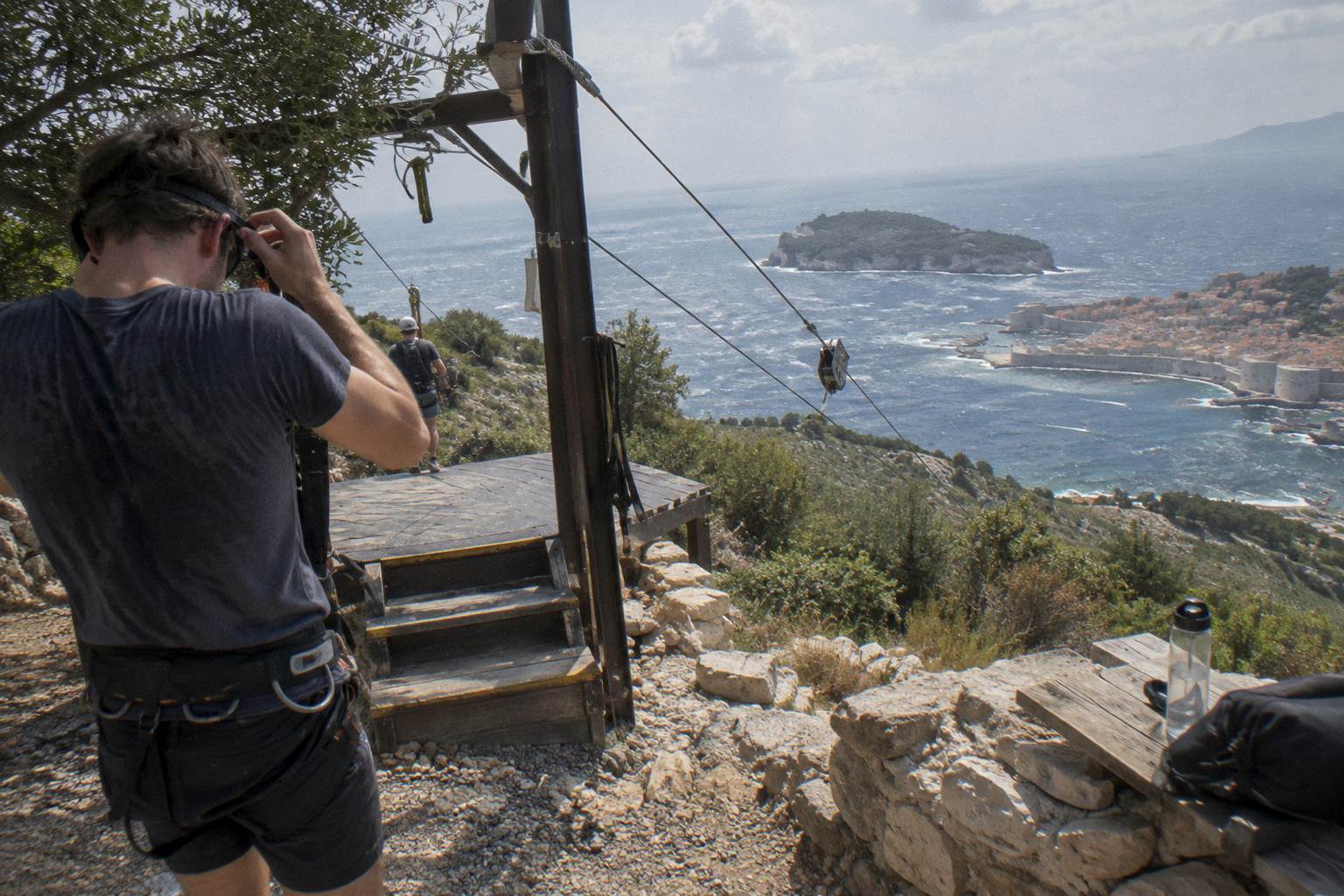
The superman position is worth remembering too, because it changes how clothes behave. Lying horizontal means anything pooled around your waist wants to shift, so a t-shirt tucked in or a fitted top stays put while a loose one rides up. Trousers with a bit of stretch beat stiff denim for the same reason. None of this is mandatory, it is simply the difference between noticing your outfit and forgetting it entirely, and forgetting it is what you want at 100 km/h.
| Month | Typical conditions on the coast | Sensible outfit |
|---|---|---|
| March to May | Mild, sometimes breezy | Trousers, t-shirt, light jacket |
| June to August | Hot, strong sun | Shorts, t-shirt, sun cream, cap for the walk |
| September to October | Warm days, cooler afternoons | T-shirt plus one warm layer |
None of this is an operator rule. It is the same advice that applies to any active half-day on the Dalmatian coast, adjusted for the fact that the technical clothing is handled for you. If a specific medical or clothing question is nagging you, the weight, age and health limits for the Dubac line are covered separately, and the operator confirms anything unusual at booking.
A word on sun cream, since the base sits on an open hill in a coastal climate: apply it before you leave your accommodation rather than carrying a bottle all day, and reapply only if you plan to linger. A cap sounds trivial until the 45 minute walk back, when a bare forehead in the middle of a Dalmatian afternoon stops being trivial very quickly. Both items fit in a pocket, which keeps the bag situation as simple as the rest of the day.
Footwear deserves the same plain thinking. Most of your time on the day is spent standing around the base and walking, not flying, so whatever you would normally wear for a stroll on the coast is the right call. Because the harness and goggles are supplied, the only things actually touching your skin for the flight are your own clothes, which is another reason fitted, comfortable layers work better than anything complicated.
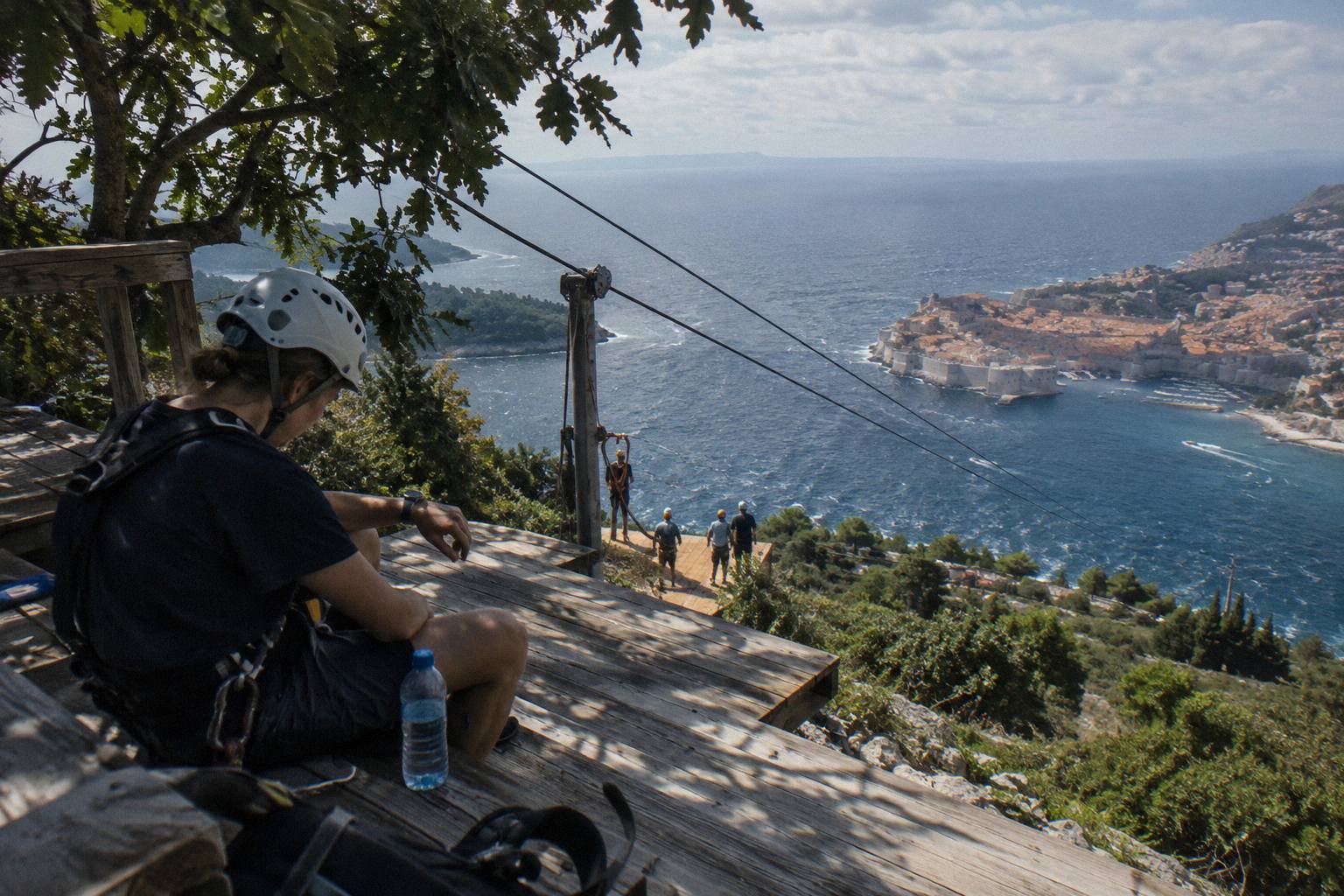
One last practical note: since the technical equipment is provided and the water bottle is included, your pockets only need to hold the small items already mentioned. Dress for the month, keep the outfit simple, and everything else on the day is already handled for you.
What Should You Actually Put In Your Bag?
Almost nothing: phone, a little cash or card for the taxi or bus fare, sun cream in summer, and perhaps a spare water bottle for the walk back, because everything technical is waiting at the base. A small backpack you can wear comfortably for 45 minutes beats a tote bag, and the less you carry, the less there is to keep track of on the hill.
Work through the day in order. Getting there is either bus 10 from the Cable Car bus station, a taxi to the Dubac stop, or your own car with free parking, so the fare or the parking situation is settled before you even think about the bag. At the base, the kit is handed over and the water is included, so there is no shop run to do. The flight itself requires empty hands. Then comes the walk back, about 4 km downhill into the Old Town, and that is where a small bag earns its place: sun cream, a spare layer in the shoulder months, and a phone for photos of the coast once you are back at ground level.
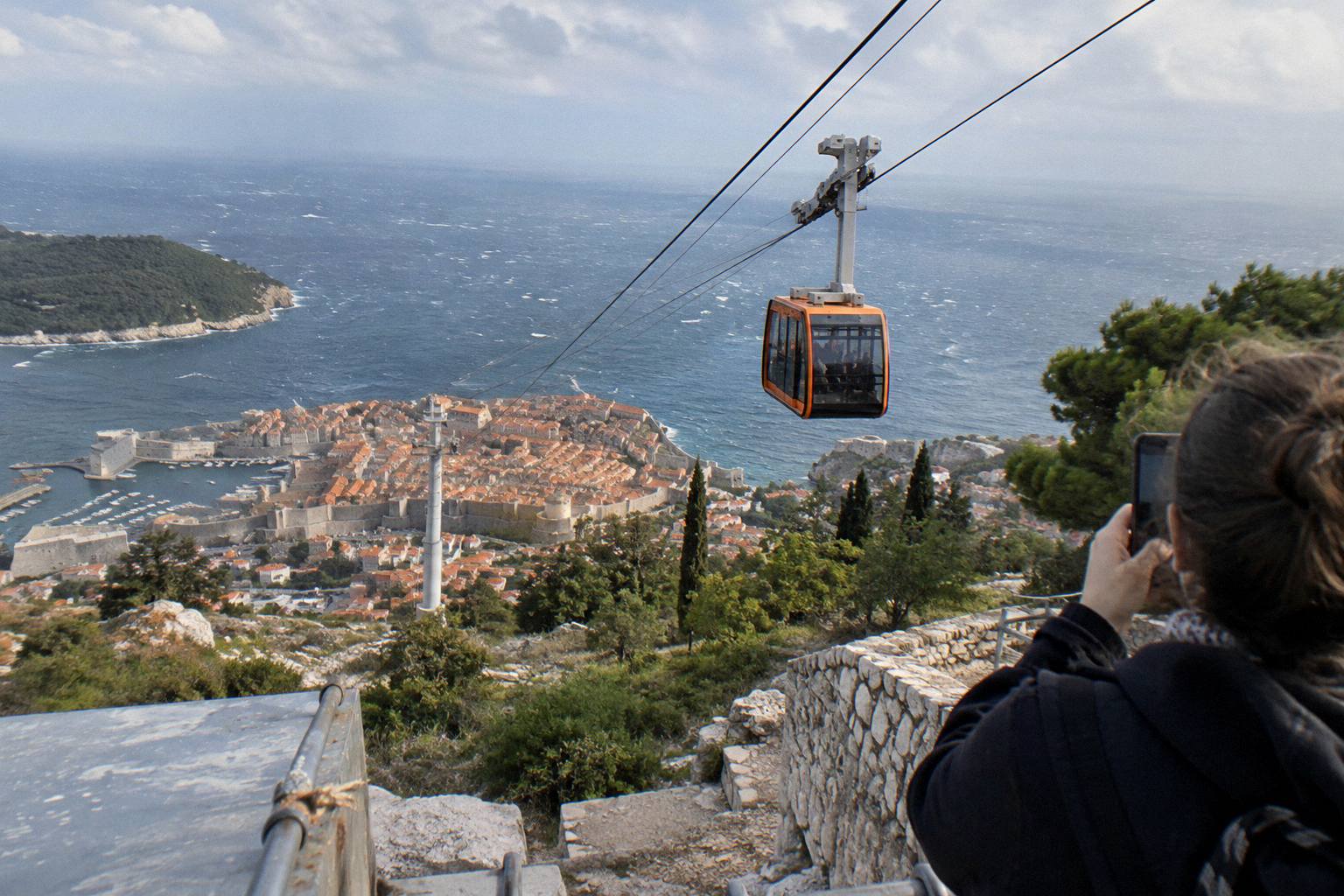
One item worth planning for is weather cover. The ride is cancelled in rain or strong wind, and with free cancellation up to 24 hours before, a bad forecast costs you nothing but the rescheduling effort. How that works in practice is covered in the piece on whether wind or rain cancels the superman zipline at Dubac. For packing purposes the takeaway is simple: do not buy anything special for a trip that the forecast can move, because your ordinary day-trip kit is already enough.
The same logic applies to snacks. A slot of 1 hour 15 minutes or 1.5 hours plus a walk home does not require provisions, and most riders finish in time for a late lunch in town. If someone in your group likes having something on hand, a small item in the bag covers it, but there is no need to provision for a hike. The hill is close to a major city, not remote, and the whole point of the location is that it is easy to reach and easy to leave.
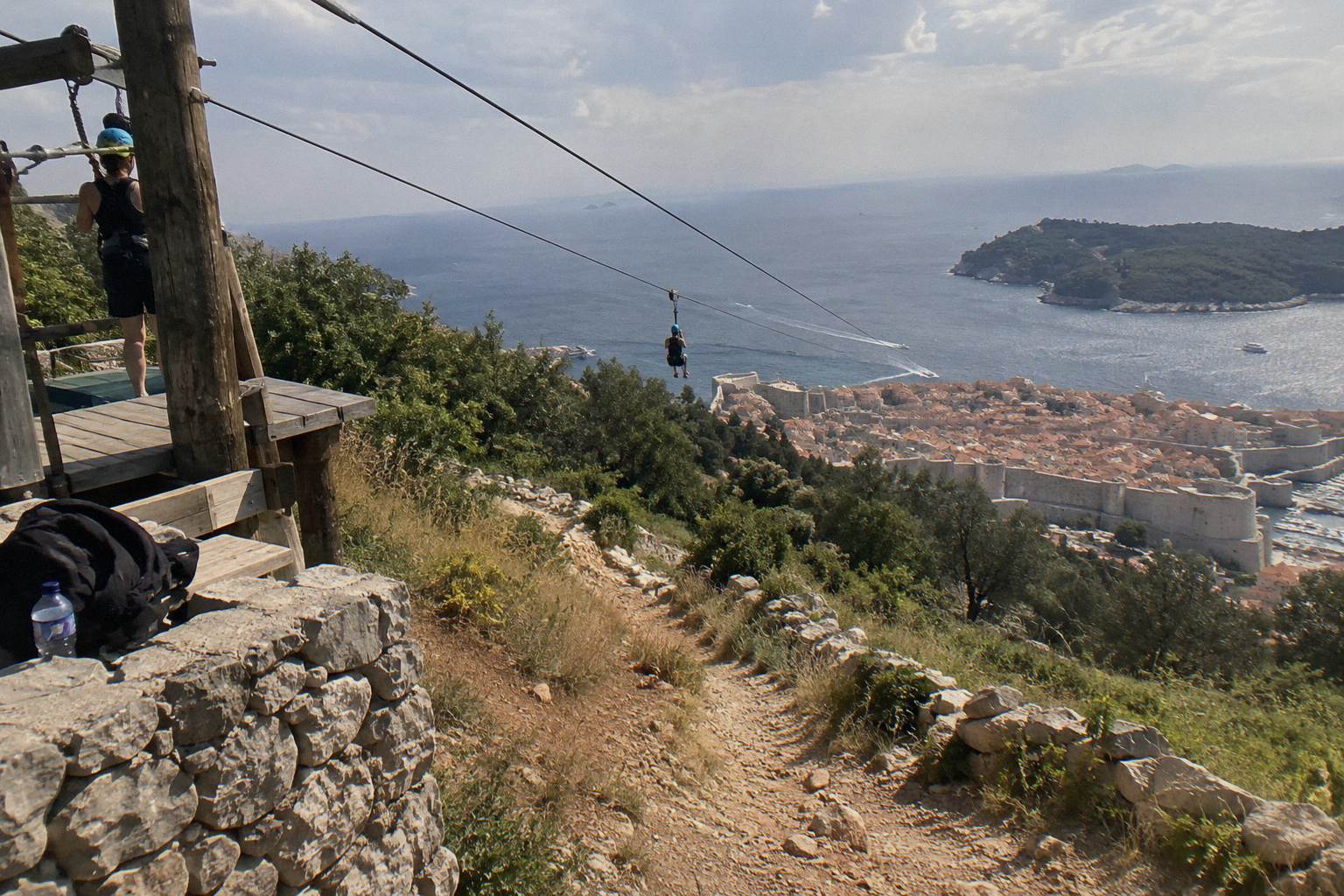
How Long Is The Whole Trip, And Does That Change The Packing?
Plan for a half-day door to door: the booked slot is 1 hour 15 minutes or 1.5 hours, the base is about 4 km from the Old Town, and the downhill walk back takes around 45 minutes, so even with travel you are looking at three to four hours, which means no food, spare outfit or overnight kit is needed for the trip.
This matters because packing lists balloon when people overestimate a day. A half-day excursion needs a half-day bag: phone, fare, sun cream, water on a hot afternoon. The booked duration covers your time with the operator at Dubac, and the difference between the two options is the length of that slot, not the ride, which is the same 900 m line either way. If you are still deciding between the two, the breakdown of how long a zipline tour above Dubrovnik lasts walks through the timings.
Add the journey and the optional walk home and the shape of the day is clear. Out by bus or taxi in the morning, a flight at up to 100 km/h over the canopy toward Lokrum, then a downhill stroll back into town with the rest of the afternoon free. That is a morning wardrobe, not an expedition wardrobe, and it is exactly why the short packing list works.
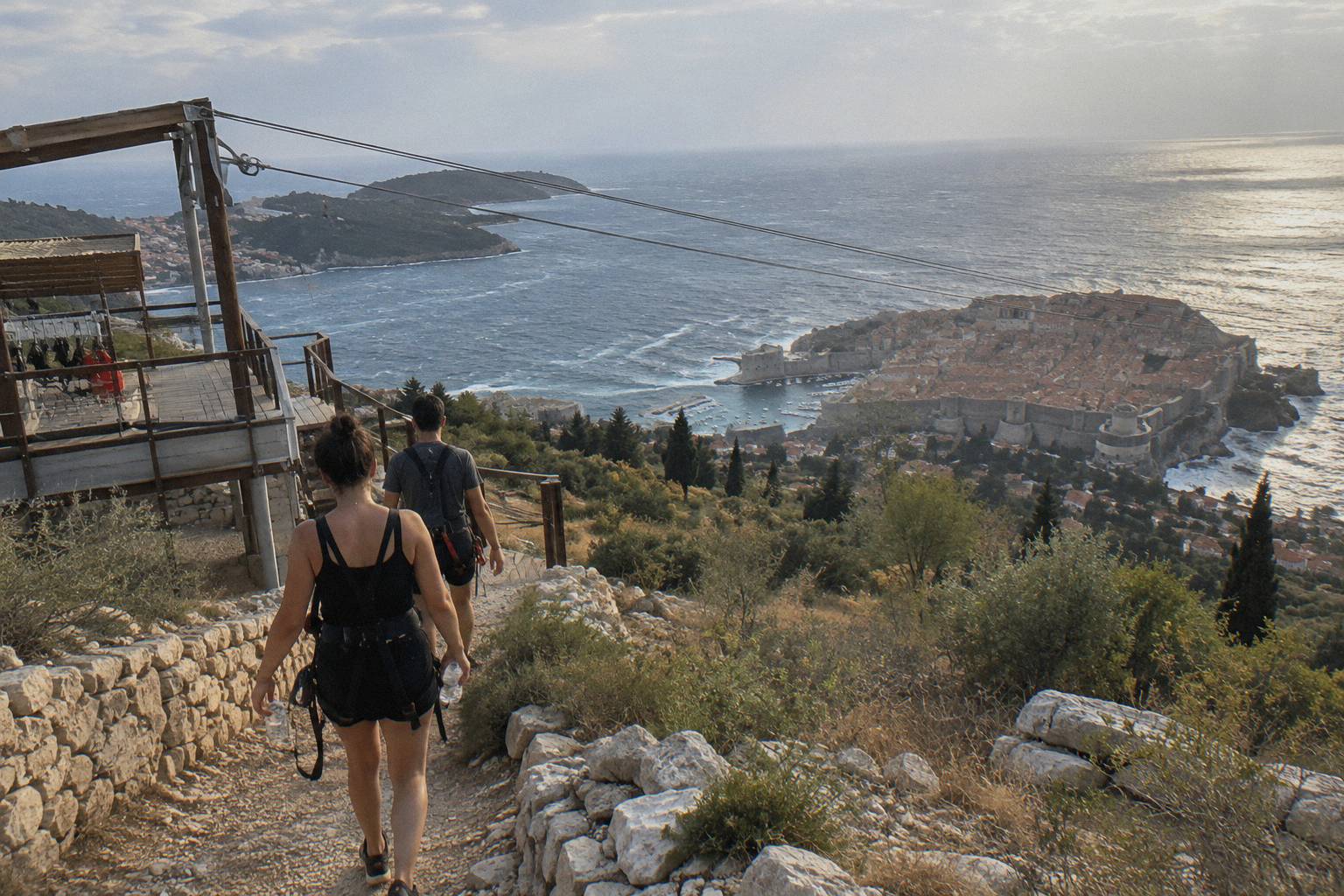
A morning slot also simplifies the sun question. With hours running 09:00 to 18:00, anyone who books early gets the coolest part of the day for the flight and the walk, which in midsummer is worth choosing deliberately. Later slots mean a hotter descent if you walk, so the hat and the spare bottle move from optional to sensible. Nothing about the bag changes, only the priority of two items inside it.
Riders who want the whole picture before they commit can compare the two time slots directly:
Whether you walk, ride the bus back or drive, the day packs down to one small bag and a pair of decent shoes. Dubrovnik Ziplines covers the rest of the planning: routes from Lapad and the cruise port, pairing the ride with other activities, and how the superman line at Dubac actually works, all in the guides alongside this piece.
Common Questions About Zipline Packing
What To Wear And Bring On A Zipline Tour Above Dubrovnik?
Wear comfortable clothes and closed shoes, and bring almost nothing: the harness, helmet, gloves and goggles are included at the Dubac base, along with water and free parking. The only item that really matters is sturdy footwear for the roughly 45 minute downhill walk back to the Old Town.
Do I Need To Bring My Own Helmet Or Gloves?
No. The operator at Dubac includes the harness, helmet, gloves and goggles with every booking, on both the 1 hour 15 minute and the 1.5 hour options. Your bag needs nothing technical for the flight.
Can I Wear Sandals Or Flip-Flops?
They are a poor choice, mainly because of the return leg: the walk back to the Old Town is about 4 km downhill and takes around 45 minutes. Closed trainers or light walking shoes make both the flight and the walk far more comfortable.
Is Water Included, Or Should I Bring A Bottle?
Water is included with the ride, so a bottle is optional. On a hot summer afternoon a spare one for the downhill walk back is a reasonable extra, but nothing more than that.
What Happens To My Bag During The Flight?
Keep it small and simple. Most riders bring nothing bigger than a phone and a light layer, and the operator confirms arrangements for anything larger at booking. The less you carry to the base, the less there is to think about.
Should I Pack Differently If Rain Is Forecast?
The ride is cancelled in rain or strong wind, and every booking carries free cancellation up to 24 hours before, so there is no need to buy wet-weather gear for the trip. Pack your ordinary day kit and let the forecast decide the day before.